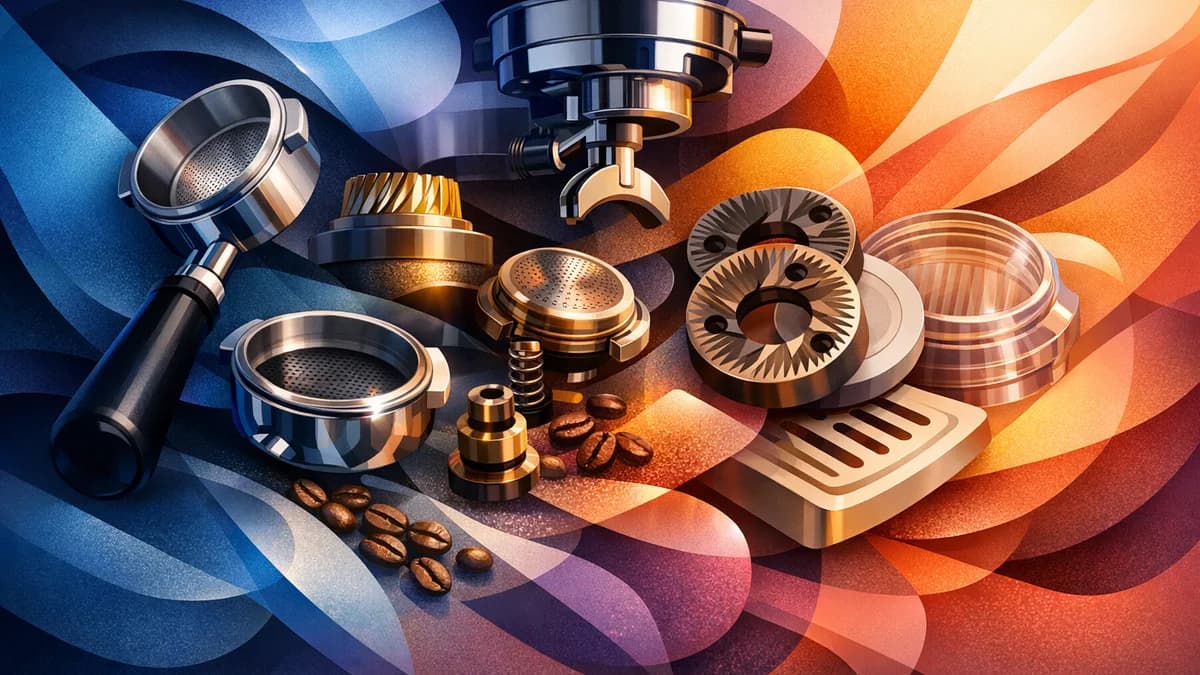
Coffee equipment downtime is expensive
When a commercial coffee machine is down, it is not a small inconvenience.
A café may have customers waiting. A barista may be trying to keep service moving. A technician may be diagnosing the issue between rushes. The part might be a seal, screen, steam valve, group head component, grinder burr, gasket, or switch.
The buyer often knows the machine. They may know the failed area. But they may not know the exact part name, especially if the machine has several similar seals, screens, or fittings.
That is where a model-specific parts page helps.
Start with the machine model
Coffee machines and grinders are highly model-specific.
A La Marzocco Linea, a Rocket Appartamento, a Wega, a Sanremo, and a Nuova Simonelli machine may all have group heads, steam assemblies, valves, seals, and screens, but the parts are not interchangeable just because they perform similar jobs.
Build the page around the machine or grinder model first.
A customer should not have to browse every coffee machine seal in your store to find the one that fits their machine.
Use diagrams around service areas
Coffee equipment often has clear service zones.
Group head assemblies, steam wand assemblies, hot water valves, pump sections, grinder mechanisms, burr carriers, hoppers, and control panels can all be shown as focused diagrams.
Do not force the whole machine into one image if the useful buying path is smaller.
A technician replacing a group head gasket does not need to scan grinder parts. A café owner replacing a steam wand seal does not need the full electrical layout.
Recurring consumables deserve clear placement
Some coffee machine parts are replaced often.
Shower screens, group head seals, portafilter baskets, grinder burrs, water filters, and small gaskets may be recurring purchases rather than one-off repairs.
Those products should be easy to find and clearly named.
A parts diagram can help a less technical buyer identify where the part sits. A clear parts list then helps them confirm the item before ordering.
Technical buyers still need speed
Technicians may know the machine better than the café owner does.
They may order by part number, SKU, or service area. That does not mean the diagram is useless. A diagram gives them a fast visual lookup, especially when they are checking related parts or confirming a position while working on the machine.
For trade-style coffee equipment buyers, show useful details like SKU and stock status where appropriate.
The page should support fast confirmation, not force them through long descriptions.
OEM and compatible parts need honest labels
Coffee equipment stores often sell genuine and compatible parts.
A genuine group seal and a compatible alternative may both fit the same position. A grinder burr set may be OEM or aftermarket. Some buyers care about brand; others care about availability or price.
If both are valid options for the same diagram position, they can appear under one hotspot in Konfigr.
Label them clearly. Do not make a compatible part look like an OEM part if it is not.
Stock visibility matters between service windows
Café buyers and technicians often order parts around service windows.
If the part is needed before the next morning rush, availability matters. A buyer may choose a compatible option if the genuine part is not available, or order multiple consumables while the machine is already being serviced.
Konfigr reads product data from Shopify, so the parts list can show current product information from your store.
That gives buyers useful information while they are already looking at the machine diagram.
Use plain names as well as technical ones
Not every buyer uses the same language.
A technician might search for a part number. A café owner might search for “coffee machine rubber seal” or “steam wand tip”.
Use product names that bridge the gap where possible. Include technical naming, but do not ignore the plain-language terms buyers actually use.
The diagram provides the visual confirmation. The wording helps the customer trust they have found the right item.
Keep machine ranges separate when parts differ
Coffee equipment can have model changes, revisions, and regional differences.
Do not combine models into one Konfig unless the parts shown are genuinely the same. If two machines look similar but use different group head parts, keep them separate.
Konfigr does not decide whether a part fits. Your catalogue structure must do that work.
A clear model-specific page is better than one broad page that creates doubt.
Related Articles
Continue your learning with these related resources:
- Selling Spare Parts on Shopify: What Actually Works (Comprehensive Guide)
- Selling HVAC and Plumbing Parts on Shopify
- Structuring Your Shopify Store Around Multiple Machine Models
- Managing Trade and Retail Customers in the Same Shopify Parts Store
- Spare Parts SEO: How to Structure Your Pages So Customers Find Them
- Selling Automotive Spare Parts on Shopify