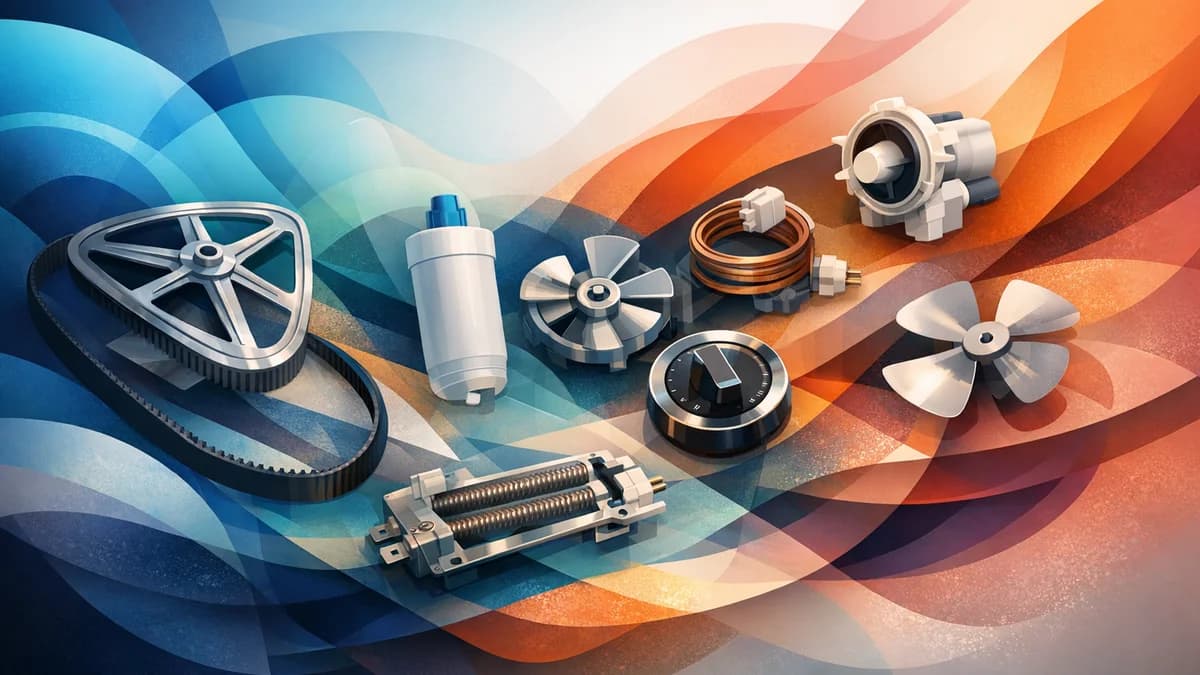
Appliance parts are model-specific
Appliance spare parts can look simple from the outside.
A door seal, pump, heating element, filter, handle, hinge, or control knob may seem easy to identify until the customer sees several similar options.
That is the issue with selling appliance parts online. Customers often know the appliance model, but they do not always know the part name or the correct version.
A model-specific parts page gives them a clearer path.
Start with the appliance model
For appliances, the model number matters.
A washing machine door seal may differ across versions. A dishwasher pump may look similar but not fit another series. Oven elements, fridge shelves, hinges, filters, and handles can vary by model, year, or range.
Build the customer journey around the appliance model first.
Once the customer lands on the right model, the diagram can help them identify the part.
Use one Konfig per model where possible
If parts differ between appliance models, use separate Konfigs.
Do not force several similar models into one diagram unless the parts are genuinely the same. That can create confusion and wrong orders.
A separate Konfig for each model gives the customer confidence that the diagram applies to the appliance they own.
For large appliance ranges, use collections or product pages to guide customers to the correct model first.
Manufacturer diagrams can be useful
Many appliance parts catalogues start with manufacturer diagrams or service drawings.
These can work well in Konfigr if they are clear enough for customers. A dishwasher diagram might show spray arms, racks, seals, pumps, filters, and hoses. A washing machine diagram might show the door seal, pump, belt, drum parts, valves, and panels.
If the manufacturer drawing is too technical for retail customers, consider a simplified diagram or clearer assembly image.
The image should help people identify the part, not overwhelm them.
Use familiar part names
Customers often describe appliance parts in plain language.
They may search for “washing machine rubber seal” instead of “door boot gasket”. They may say “dishwasher basket wheel” instead of the supplier’s exact part title.
Use product names that bridge both worlds where possible.
You can include the common name and the technical name if it helps, such as “Door Seal / Gasket”. The diagram provides visual confirmation, but the wording still matters.
Common appliance scenarios
Appliance parts pages should reflect real customer problems.
A washing machine is leaking, so the customer checks the door seal and drain pump area. A dishwasher is not draining, so they look for the pump, filter, or hose. An oven is not heating, so they look for the element. A fridge shelf or handle is broken, so they need the exact replacement for that model.
These are practical tasks.
The Konfig should make the relevant parts easy to find from the diagram.
Shared parts need careful handling
Some appliance parts fit several models.
A filter, shelf, handle, hinge, or seal may be shared across a range. If the physical product is identical, keep it as one Shopify product and link it to each relevant Konfig.
But do not assume parts are shared just because they look similar.
Appliance parts can have small differences that matter. If the part is different, create a separate product and link it only where it belongs.
Stock status can prevent wasted time
Appliance repairs can be urgent.
If a washing machine is leaking or an oven is unusable, the customer wants to know whether the part is available before they commit to the order.
Showing stock status in the parts list can help customers decide whether to order now or contact you for alternatives.
Konfigr reads product data from Shopify, so the parts list can reflect the product information you maintain there.
Do not turn a parts page into a repair manual
Konfigr is a visual parts catalogue, not a repair guide.
You can help customers identify and buy parts, but you do not need to explain every repair procedure on the parts page.
If installation advice is needed, use the product page, a separate guide, or manufacturer documentation where appropriate.
Keep the Konfig focused on identification and ordering.
Make appliance parts less of a guessing game
Appliance customers often know the symptom and the model, but not the part.
Your job is to connect those pieces.
Give them a model-specific page. Show a clear diagram. Use plain names. Link the correct Shopify products. Keep shared parts tidy. Show useful availability details.
That is how appliance spare parts become easier to buy on Shopify.
Related Articles
Continue your learning with these related resources:
- Selling Spare Parts on Shopify: What Actually Works (Comprehensive Guide)
- Selling HVAC and Plumbing Parts on Shopify
- Structuring Your Shopify Store Around Multiple Machine Models
- Managing Trade and Retail Customers in the Same Shopify Parts Store
- Spare Parts SEO: How to Structure Your Pages So Customers Find Them
- Selling Automotive Spare Parts on Shopify