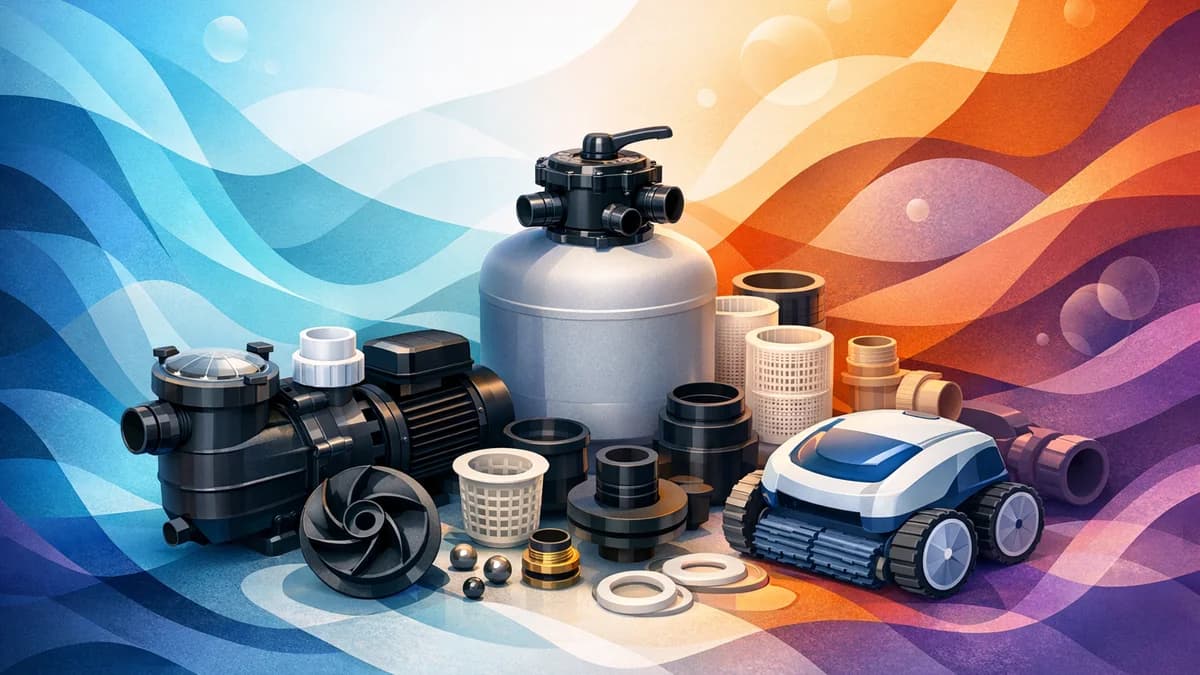
Pool equipment is a natural fit for parts diagrams
Pool equipment is full of replaceable parts.
Pumps, filters, chlorinators, heaters, cleaners, valves, and control units all have components that wear, crack, block, leak, or fail over time.
The customer often knows the equipment model. They may even have the broken part in their hand. But they do not always know the correct part name.
That is why pool equipment works so well with model-specific parts diagrams.
Pool customers often identify by position
A customer may say the pump is leaking near the lid. Or the motor is making noise. Or the basket has cracked. Or the seal has failed after summer use.
They can usually point to the problem area, but they may not know whether they need a lid O-ring, mechanical seal, diffuser, impeller, union tail, basket, or housing.
A flat collection of pool parts makes them translate what they see into technical language.
A diagram lets them start with the product and identify the part visually.
Use one Konfig per pump or equipment model
For pool equipment, model accuracy matters.
A pump range may have several versions that look similar but use different parts. Filters can have different cartridges, lids, clamps, gauges, and seals. Heaters may vary by size, series, or internal layout.
Create Konfigs around the model or assembly the customer recognises.
A customer with a specific pump should land on that pump’s parts page, not a general pool spares list containing parts for every model.
Exploded views are often available
Pool equipment retailers often have access to manufacturer exploded views.
These are ideal for Konfigr because they show the part positions clearly. A pump exploded view might show the lid, basket, O-rings, diffuser, impeller, mechanical seal, volute, motor, and fasteners.
Use the clearest version you have. If the original PDF is crowded, extract the diagram cleanly or simplify it before uploading.
The diagram should help the customer identify the part, not make them read a manufacturer table.
Common pump parts need clear naming
Pool pump parts can sound similar.
There may be several O-rings. A seal kit may include more than one seal. An impeller may suit a particular horsepower or model. A lid may look the same but differ slightly across series.
Use clear product names in Shopify before linking them to the Konfig.
Include model, size, or position details where they prevent confusion. The diagram helps, but the product title should still confirm what the customer is buying.
Seasonal demand makes stock visibility useful
Pool parts demand is often seasonal.
Before summer, customers start repairing pumps, replacing seals, cleaning filters, and fixing equipment that has been sitting unused or under strain.
Stock visibility can matter during those periods. If a seal kit or impeller is unavailable, customers want to know before they plan a repair.
Konfigr can show stock status from Shopify product data where you choose to display it.
OEM and aftermarket choices are common
Pool equipment often has genuine and aftermarket options.
A customer may prefer the OEM impeller, lid, or seal kit. Another customer may choose an aftermarket part if it is cheaper or available sooner.
If both options are valid for the same diagram position, you can show them under the same hotspot.
Label them clearly. Do not make the customer guess which part is genuine and which is aftermarket.
Shared parts appear across pump ranges
Many pool equipment catalogues contain shared components.
An O-ring, union, seal kit, pressure gauge, or basket might fit more than one model. If the physical product is the same, keep it as one Shopify product and link it to each relevant Konfig.
Each pump diagram can show the part in its own position, while the product data remains centralised in Shopify.
This keeps large pool parts catalogues easier to maintain.
Think about the repair scenario
A customer’s real situation is usually practical.
The pump is leaking. The cleaner is not moving. The filter lid is cracked. The heater is throwing an error. They want to find the part and get the repair moving.
The page should support that.
Show the model. Show the diagram. Let the customer click the part, check the details, and add what they need.
Pool parts pages should reduce guessing
Pool equipment customers often want confidence more than choice.
They do not want to order the wrong seal or wait for a reply to identify a common impeller. They want the page to show them the right area of the equipment and the matching product.
That is where Konfigr fits.
It gives pool equipment retailers a way to turn model diagrams and Shopify products into usable parts pages.
For pumps, filters, heaters, and other equipment with clear assemblies, that visual structure makes sense.
Related Articles
Continue your learning with these related resources:
- Selling Spare Parts on Shopify: What Actually Works (Comprehensive Guide)
- Selling HVAC and Plumbing Parts on Shopify
- Structuring Your Shopify Store Around Multiple Machine Models
- Managing Trade and Retail Customers in the Same Shopify Parts Store
- Spare Parts SEO: How to Structure Your Pages So Customers Find Them
- Selling Automotive Spare Parts on Shopify